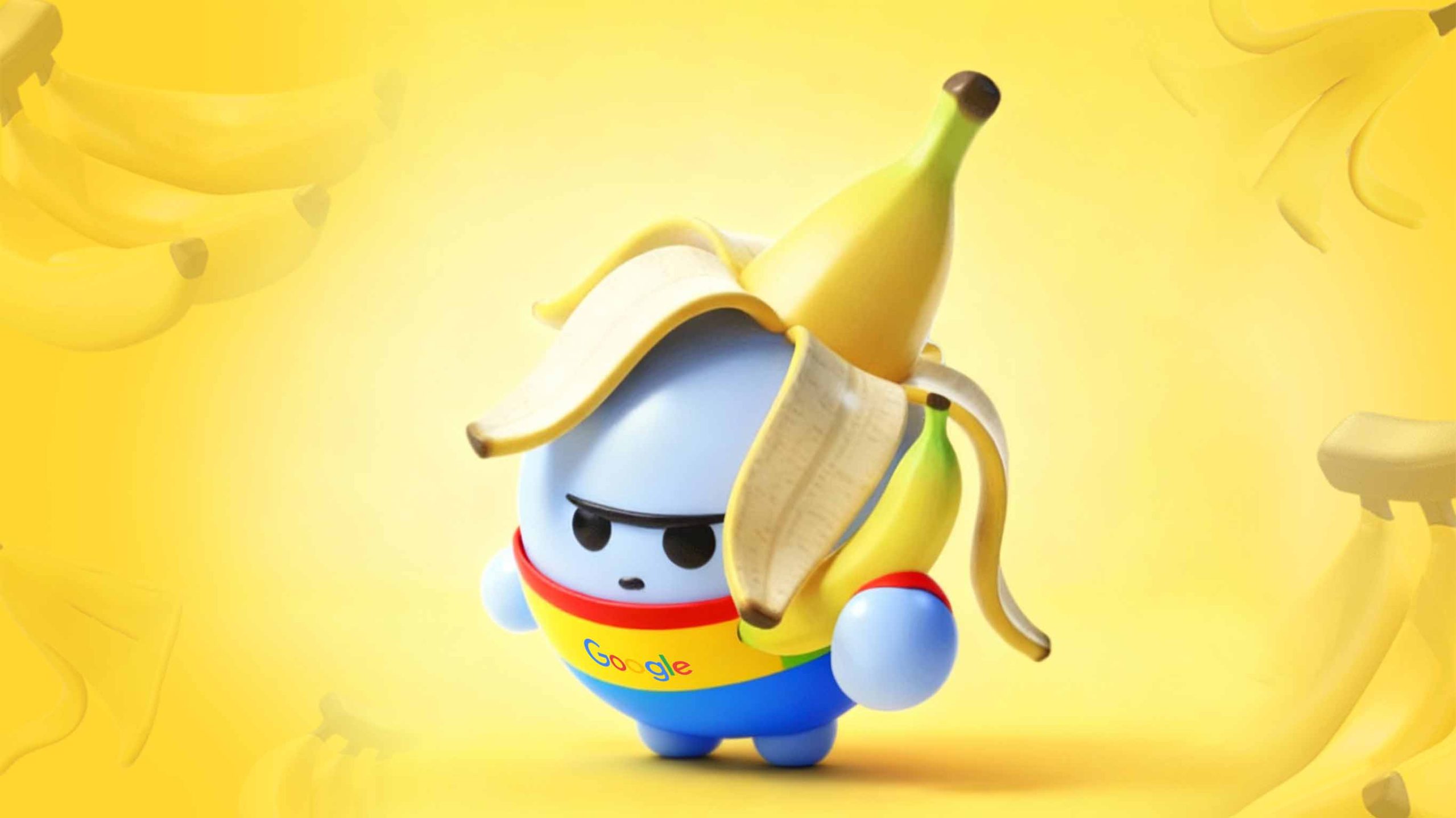
Nano Banana Pro new features are already attracting attention as Google formally released Nano Banana—the Gemini family’s image model—as Gemini 2.5 Flash Image, reshaping generative imaging since its 2025 debut.
The story now seems to be entering a second act. Recent signals in the Gemini interface point to a follow-up release widely known as Nano Banana 2 (internally codenamed GEMPIX2).
These new features expand the creative range of Gemini’s multimodal stack and deliver higher-fidelity generation with faster, more precise, and controllable editing workflows for professional creators and developers.
Prompt: Let her put down her phone, then give a thumbs up
Showcased examples come from banananano.ai

Original

Nano Banana

step1x-edit

FLUX
What is the Nano Banana, exactly, and why did it matter in the first place?
Nano Banana, Google’s marketing name for Gemini 2.5 Flash Image, enables users to mix images, preserve character consistency, and apply transformations with natural-language prompts. It effectively turns Gemini into a flexible image studio for blending photos, changing outfits, and transferring styles.
Nano Banana, Google’s marketing name for Gemini 2.5 Flash Image, enables users to mix images, preserve character consistency, and apply transformations with natural-language prompts. It effectively turns Gemini into a flexible image studio for blending photos, changing outfits, and transferring styles.
Why it mattered to creators and businesses
Nano Banana changed the way creators iterate visuals, letting teams quickly prototype and refine images without long Photoshop sessions. Its intelligent text prompts preserved likeness and detail, turning one-off generative art into production-ready assets.
What evidence is there that Nano Banana 2.0 is coming?
The most concrete public trigger was an announcement card in the Gemini web UI referencing an internal codename, which sources identified as GEMPIX2, and describing an upcoming update to Google’s image generation features. It served as a classic pre-release teaser, signaling creators and partners about a potential launch.
This follows Google’s established rollout pattern, as seen with the original Nano Banana release. These signals aren’t isolated rumors, but UI breadcrumbs backed by clear precedent.
The Nano Banana 2 is coming soon — what features will it have?
At the feature level, the best mix of public information and informed inference points to a focused set of upgrades: higher-resolution outputs, faster iterative edits, more reliable character and object consistency across edits, and improved multi-image fusion.
Faster pipelines and higher output resolution
Insider previews suggest GEMPIX2 will improve export quality, offering 4K-capable images and faster render times. This is important for creators who need final assets ready for video timelines or print layouts without upscaling or rework.
Presets and export profiles are expected for common output destinations, including social media, web, print, and video frames.
Improved edit precision and layer-aware transformations
The original Nano Banana was praised for preserving character continuity across edits.
Nano Banana Pro adds precise, language-driven control, enabling instructions like “replace only the jacket while preserving texture and lighting.” This improves localized editing and bridges conversational prompts with pixel-level manipulation.
Multi-image fusion, style transfer, and temporal consistency
Early Nano Banana supported blending multiple source images.
GEMPIX2 expands this feature, enabling richer composite scenes and more coherent style transfer. Deterministic style control lets creators generate variations that feel like part of the same visual family—a big win for series, thumbnails, or episodic art.
There are also hints it will better handle temporal consistency for short video or frame-by-frame edits, laying the groundwork for future video-focused features.
Professional tooling: metadata, watermarking, and provenance
Google’s image tooling ecosystem already includes features like invisible SynthID watermarks for transparency and provenance.
GEMPIX2 is expected to tighten these measures with export metadata, provenance tags, and optional visible or invisible watermarks. These tools help platforms and rights managers track AI-generated assets, supporting industry-wide traceability.
Faster iteration and lower latency
Nano Banana set a high bar for interactive speed; GEMPIX2 reportedly targets even faster iteration times (complex prompts reportedly completing in under 10 seconds in early tests), which makes rapid A/Bing and in-session creative exploration more practical on mobile and web clients. Faster turnaround reduces context switching for creators and supports iterative design workflows.
Smaller but meaningful enhancements
- Better color/lighting inference so edits preserve original photo mood.
- Improved on-device privacy controls for editing photos of people.
- API exposure for developers to build Nano Banana features into apps and services.
What architecture will Nano Banana 2.0 use?
Nano Banana 2 is built on Google’s evolving image stack, often called Gemini 3 Pro Image. It evolves from Gemini 2.5 “Flash Image” toward a unified, higher-capacity image-text-vision architecture with improved cross-modal reasoning. In short, GEMPIX2 is a pro-grade, natively multimodal image model—not just an image generator attached to a text model.
Key architectural characteristics to expect
- Multimodal transformer backbone (vision + language fused): The model reasons about images like text models reason about language, tracking scene elements, narrative continuity, and instructions across edits. This improves instruction following and complex scene editing.
- Specialized image encoder/decoder submodules: High-resolution output relies on decoders for pixel-level fidelity (super-resolution, artifact suppression) and encoders that efficiently fuse and align multiple input images.
- Latent compression + upscaling pipeline for speed: GEMPIX2 likely uses fast latent generation followed by learned upscalers to produce 4K outputs without full high-res decoding, balancing interactivity with quality.
- Provenance and watermark embedding layer: Google embeds an imperceptible signature (like SynthID) to assert origin and enable verification. GEMPIX2 will adopt and refine these measures, building on those already used in Gemini 2.5 Flash Image.
How does that differ from Nano Banana 1?
The first Nano Banana ( Gemini 2.5 Flash Image) emphasized speed and competent editing with strong prompt understanding; it was an early step in bringing image editing conversationally into Gemini’s broader multimodal stack. The likely evolution to a “Gemini 3 Pro Image” core suggests several architectural shifts:
- Larger multimodal parameters and finer vision-language alignment — Deeper cross-attention between text tokens and image latents improves semantic adherence to prompts and the model’s ability to manipulate specific components within a scene.
- Higher-resolution native decoders — Architectures that can natively produce 4K imagery (or upscale with fewer artifacts) require decoders and attention mechanisms tuned for large spatial outputs.
- Sparse/compressed compute paths for efficiency — To keep editing latency low while scaling up fidelity, Google may employ sparse attention layers, expert routing, or tiles/patch-based decoders that concentrate compute where needed.
- TPU acceleration and optimized serving layers — Google’s TPU fleet and model-serving stack are likely to play a role in delivering GEMPIX2 at scale, particularly if the company wants low-latency web and mobile experiences for millions of users.
Will GEMPIX2 be multimodal or image-only?
A multimodal architecture processes text prompts, example images, and metadata together, enabling the model to understand instructions and apply them consistently to image pixels.
GEMPIX2 is expected to remain tightly multimodal, integrating text and vision-language reasoning. This enables guided edits from prompts, semantic combination of multiple images, richer storytelling, more precise edits, and better integration with search and assistant features.
What will GEMPIX2’s significance be?
For everyday creators and consumers
- Faster creative iteration: lowering friction for creative exploration can change how casual users approach images — from “one perfect take” to rapid variant-driven storytelling (e.g., generating dozens of consistent product images or character shots).
- Democratized production-grade output: 4K exports and pro pipeline features mean content that previously required photo studios could be produced or prototyped by smaller teams or solo creators. That will accelerate small-business marketing, indie game art prototyping, and rapid advertising mockups.
For creative professionals and agencies
- New workflows, faster sprints: agencies will benefit from reliable, consistent character rendering and variant generation — imagine producing a full campaign with the same model managing continuity across dozens of hero images. That reduces studio shooting costs and speeds iteration during client reviews.
- Toolchain integration: the value of GEMPIX2 will be amplified if it hooks into asset managers, version control, and rights management — allowing agencies to treat generative assets like any other production asset.
Risks, limitations and open questions
Technical risks
- Hallucinated detail in factual graphics: models can invent plausible but incorrect textual details in images (signage, labels). Expect continued attention to document/infographics fidelity.
- Edge-case consistency failures: despite improvements, multi-image character continuity is still an area where rare failures occur; production users will require guaranteed reproducibility or robust rollback features.
Policy and abuse concerns
- Deepfakes & misuse: higher fidelity makes misuse easier; robust deterrents (provenance metadata, rate-limits, policy enforcement) are essential. Google’s use of invisible watermarks is a material step, but platform and regulatory controls will be part of the conversation.
Business and commercial questions
- Pricing & access model: will GEMPIX2 be a free feature for consumer users, a paid “Pro” tier, or an enterprise-only endpoint? Google has used mixed models (free preview + paid API), and the answer will affect adoption patterns.
- Platform lock-in vs open ecosystems: how easily can generated high-res assets be exported cleanly with metadata for use outside Google’s ecosystem?
what to watch for next
GEMPIX2 (the rumored, second-generation Nano Banana) looks like a pragmatic, product-driven evolution: higher resolution exports, faster edits, improved multi-image fusion, strengthened provenance, and a backbone aligned with next-gen multimodal Gemini architectures.
Whether you’re a marketer, product manager, or creative professional, GEMPIX2 lets you produce images faster and with higher fidelity. Its improved resolution, text fidelity, character consistency, and iteration speed make it a tool you can use professionally—beyond what earlier consumer-grade models offered.