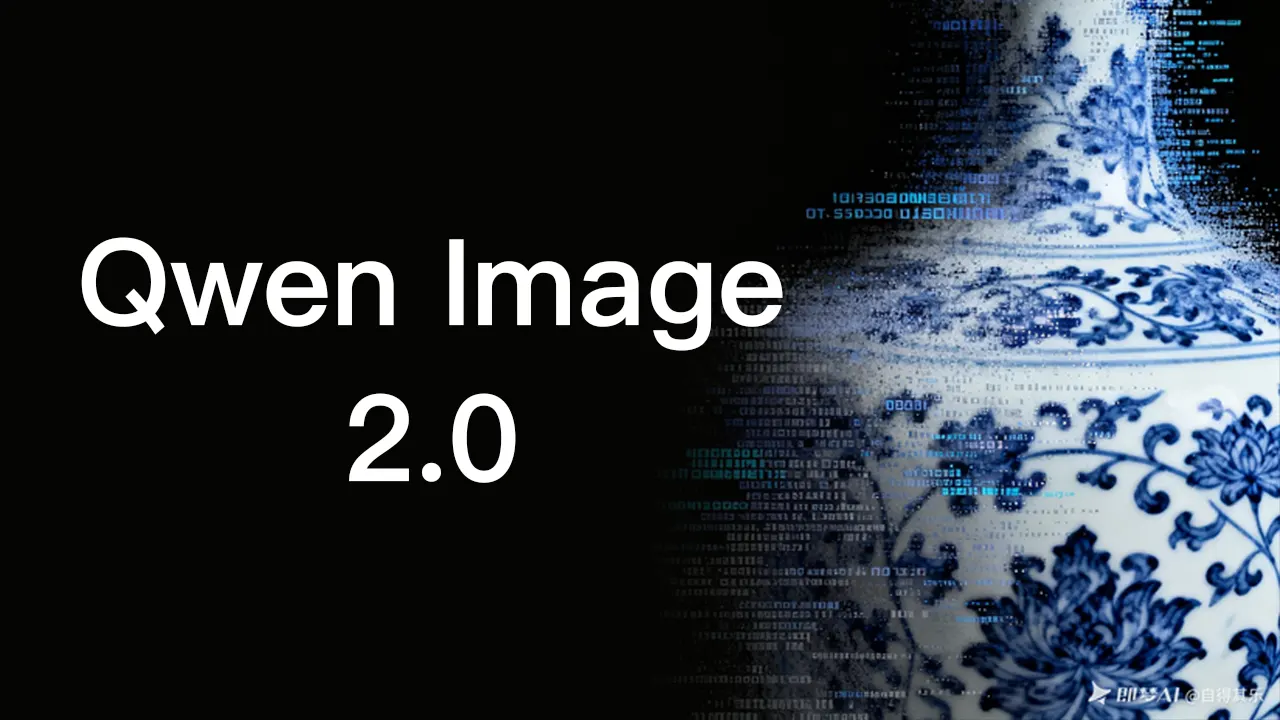
I spent the morning reading through the Qwen-Image 2.0 release notes and digging around their GitHub repo. In this Qwen Image 2.0 Review, if you’ve been ignoring AI image generators lately because they feel like toys for making cool profile pictures, you might want to take a closer look at this one.

The most striking thing isn’t that the pictures look “prettier”—it’s that they actually focused on fixing the stuff that makes these tools useless in a real workflow.
The Text Rendering Actually Works Now
This is the big one. We all know the headache of trying to get an AI to spell a single word correctly without it turning into ancient runes. In this Qwen Image 2.0 Review, it’s clear that Qwen-Image 2.0 supports massive prompts (up to 1,000 tokens) and can handle heavy text rendering in both English and Chinese.
I’m talking about generating actual, usable posters or slide layouts where the text makes sense. Prompt quality still matters—messy instructions can still lead to odd layouts. For anyone trying to design marketing materials quickly, this alone makes it worth testing out.

No More Jumping Between Tools
Usually, if you generate an image and want to tweak the background or change a jacket color, you have to export it, load up a different editing model, and cross your fingers.
They’ve essentially baked generation and editing into the same unified framework. You can just tell it to modify what it just created. It feels way more native and a lot less like a clunky copy-paste job.

Getting Rid of the “Plastic” Look and Running Leaner
AI images usually have that hyper-smooth, overly airbrushed look that immediately screams “Midjourney prompt.” By supporting 2K resolution natively, the textures—like skin, fabric, and architecture—look significantly more grounded and photographic. It feels less like digital art and closer to a camera lens.
And from a dev perspective, the architectural optimization is pretty impressive. They managed to make it faster and lighter while outperforming the older, heavier versions. Lower latency and cheaper inference are always a win if you’re trying to build something on top of this.

It feels like they stopped trying to build a “digital artist” and built a design assistant instead. If you actually care about layout and typography, it’s a massive step up.
You can mess around with it over at A2E.
Model Performance
We conducted blind testing on AI Arena. Results show that Qwen-Image-2.0, as a unified generation-and-editing model, achieves superior performance on both text-to-image and image-to-image benchmarks using the same model.