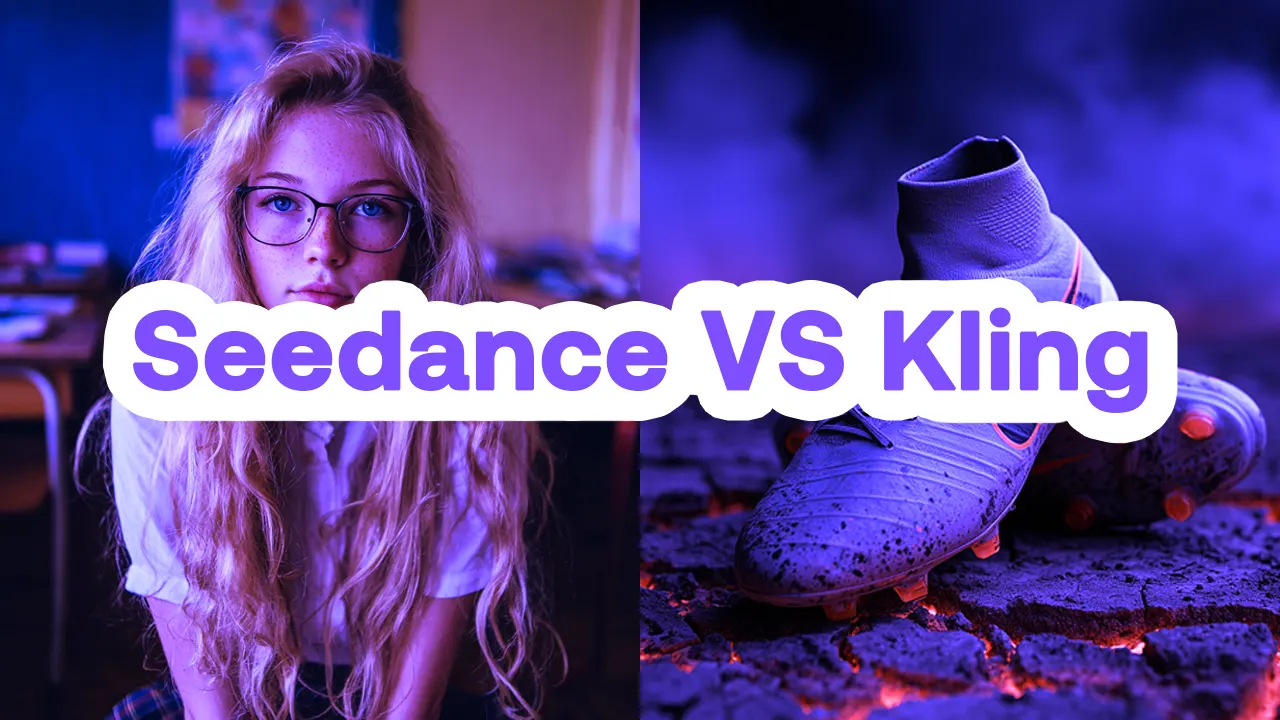
I honestly thought Seedance 2.0 was going to win this comparison pretty easily. But after testing both, the answer turned out to be less obvious than I expected.
If you follow AI video tools, you’ve probably seen Seedance 2.0 and Kling being compared everywhere. Some people say Seedance 2.0 is the stronger model, while others still prefer Kling for its cleaner, more polished visuals.
So I tested both with a mix of character videos, product shots, and scene-based prompts.
And after using them side by side, I don’t think this is really a question of “which one is better.” They’re simply good at different things.
For character videos, I’d personally lean toward Seedance 2.0.
Seedance 2.0
Kling
What stood out to me most is that the character movement feels real. Walking, turning their head, waving, running — it all looks more natural, without that awkward feeling of a still image being forced to move.
This is especially noticeable with body movement, facial expressions, and camera movement. Seedance 2.0 often feels closer to footage shot with a real camera.
Seedance 2.0
Kling
Another thing I liked is that it doesn’t always need a super detailed prompt. In some tests, I only gave it a simple description, like a person walking down the street and turning to look at the camera, and the result was still pretty usable.
That makes Seedance 2.0 feel more beginner-friendly. If you’re not great at writing detailed AI video prompts yet, it gives you a better chance of getting something decent without endless tweaking.
But Kling is definitely not weak.
Kling feels more refined visually. When generating video from the same image, it often preserves more of the original details, like fabric texture, product materials, architectural lines, lighting, and shadows.
Sometimes, if you pause the video and look at a single frame, Kling can look more impressive than Seedance 2.0.
That’s why I’d still choose Kling for product videos, commercial shots, landscapes, architecture, or anything where visual detail matters more than natural human motion.
Seedance 2.0
Kling
To me, the biggest difference is this:
Seedance 2.0 feels more like shooting a video.
Kling feels more like bringing a beautiful image to life.And those are two very different things.
So, is Seedance 2.0 better than Kling?
Not always.
For everyday content creation, character videos, short story videos, talking-head style clips, and social media content, I’d probably use Seedance 2.0 more often. It feels easier to get a usable result, and its motion and camera work feel stronger for the kind of videos people are making on TikTok, Reels, and YouTube Shorts.
But if I’m making a product-focused video, a visual showcase, or something where texture and detail are the priority, I’d still reach for Kling.
My simple takeaway:
For people and storytelling, I’d choose Seedance 2.0.
For products and polished visuals, I’d choose Kling.
Have you tried both? Does Seedance feel more like real video to you, or does Kling still win on looks?